Software Preservation Group launched C++ code vaults on April 12, 2026. The expanded collection stores 5,000+ historical C++ versions dating back to 1985 (SPG press release). Crypto firms now build secure trading engines directly from these verified archives.
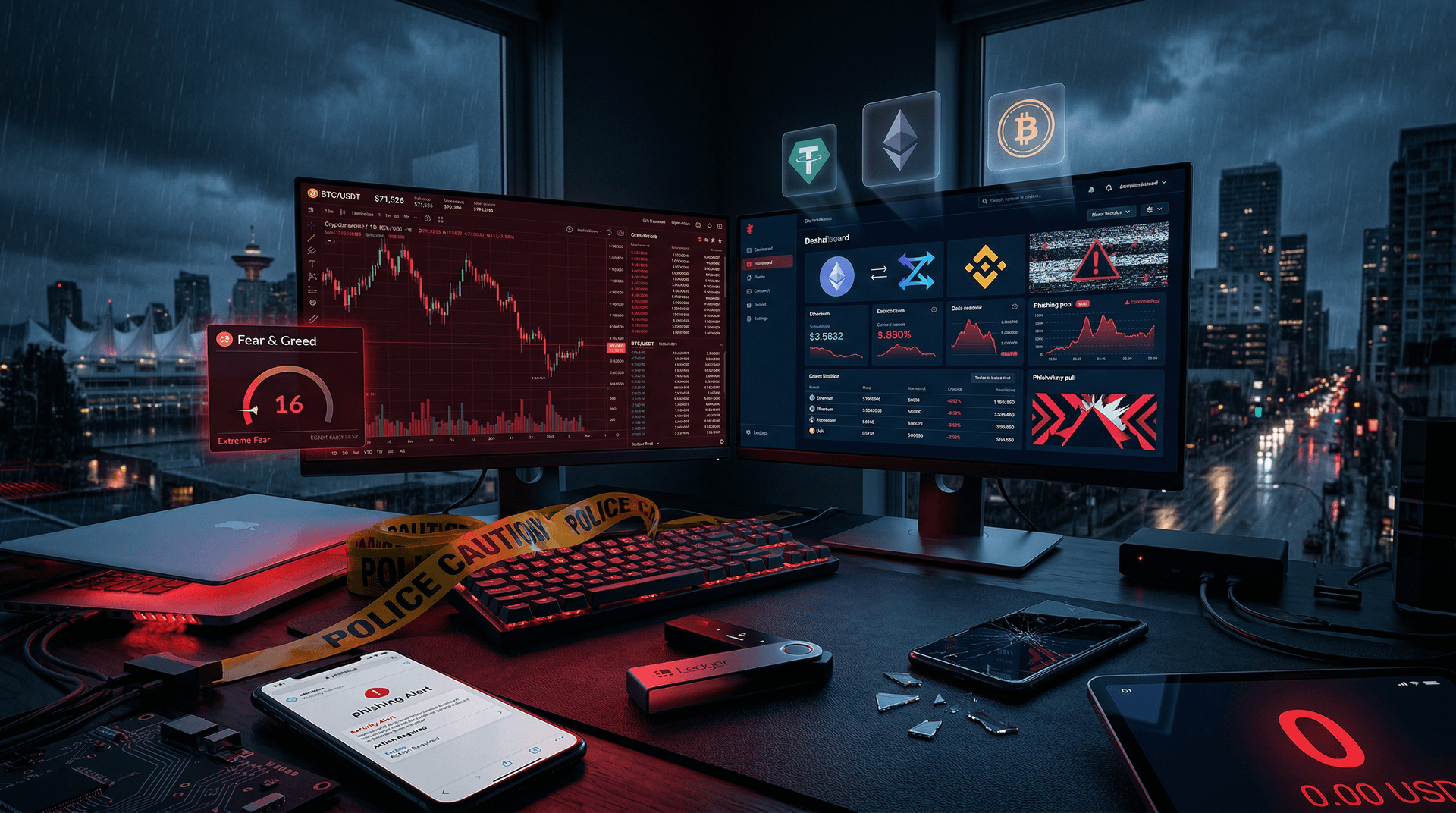
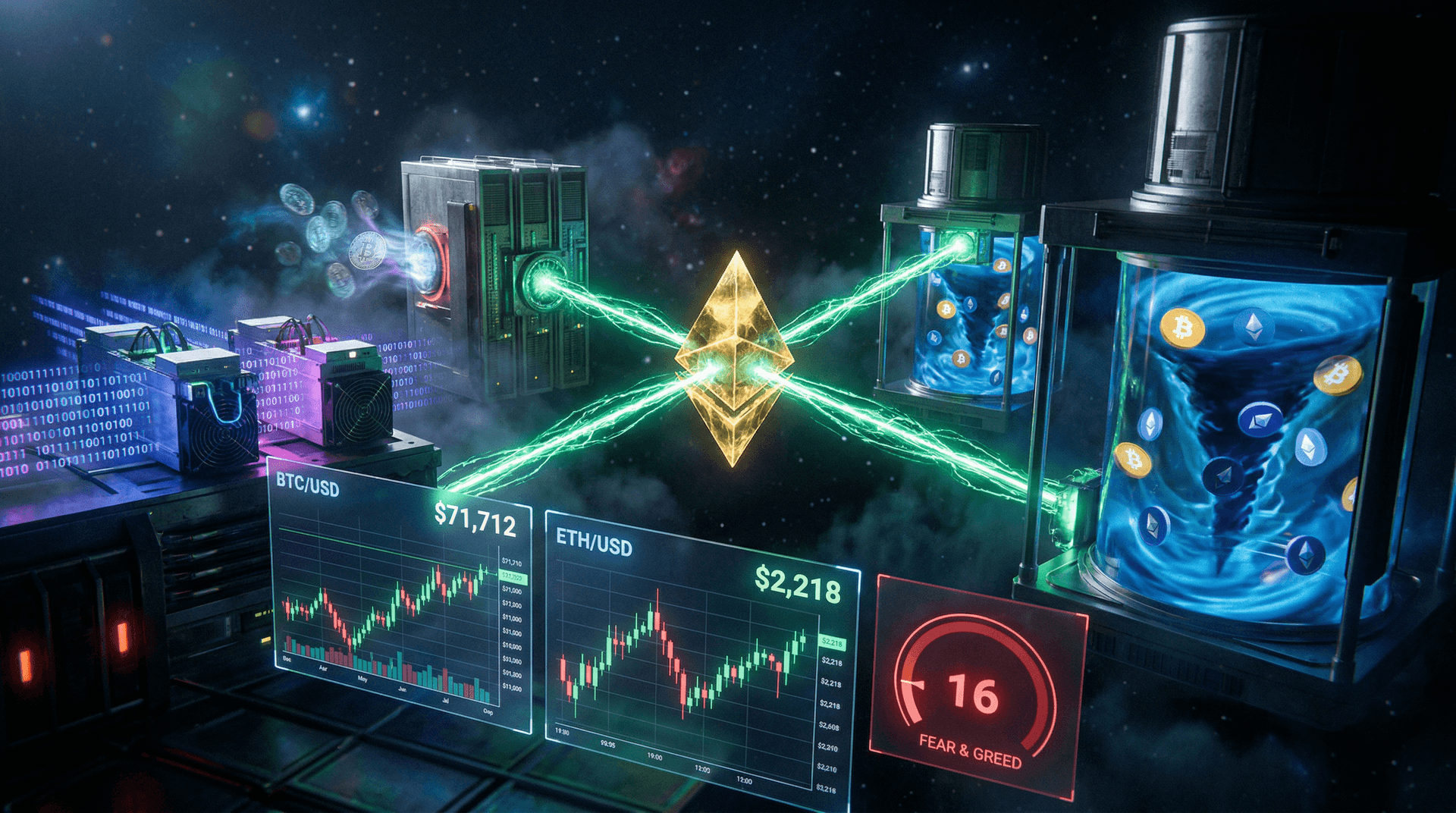
Fear & Greed Index dropped to 16, signaling Extreme Fear (alternative.me, April 12, 2026). Bitcoin traded at $71,628 USD on Binance BTC/USDT spot pair (14:00 UTC, Binance API), down 1.7% over 24 hours. Ethereum held at $2,215.84 USD on Binance ETH/USDT spot, down 1.4%. Liquidations surged to $250M USD across majors (Coinglass aggregated data, April 12, 2026).
Preserved C++ code blocks common DeFi exploits. Protocols demand microsecond response times for arbitrage and MEV protection. Historical audits reveal flaws that modern compilers miss entirely.
Market Volatility Demands C++ Code Vaults
Cloud providers including AWS Lambda and Filecoin host these C++ code vaults (SPG infrastructure report, April 2026). Firms access archived code for under $0.01 USD per query via API.
High-frequency trading firms like Jane Street and Jump Trading capture 70% of DEX spot volumes on Ethereum (Kaiko Q1 2026 report, spot trading segment). Latency spikes during volatility cost $100,000 USD per second in missed arbitrage opportunities (HFT industry benchmarks, Nanex data).
Bitcoin dominance climbed to 58% (CoinMarketCap, April 12, 2026, circulating supply basis). XRP traded at $1.33 USD on Binance XRP/USDT spot, down 1.2%. BNB dropped to $594.43 USD on Binance BNB/USDT spot, down 2.1%. Secure, audited codebases preserve competitive edges during sharp market dumps.
C++ code vaults support backtesting with compilers from the 2018 crash era. Trading firms replay historical events to simulate and predict MEV bot behaviors on Arbitrum One L2 (Arbitrum sequencer data).
Open interest in BTC perpetuals hit $28B USD on Binance futures (Binance API, April 12, 2026), with funding rates at -0.01% signaling bearish pressure.
C++ Powers Low-Latency Trading Roots
Bjarne Stroustrup developed C++ in 1985 at Bell Labs for efficient systems programming (Stroustrup memoir, 2010 edition). Trading desks adopted it in the 1990s to match NASDAQ execution speeds under 100 microseconds.
Solana's validator runtime uses C++ modules for its 50,000 TPS throughput (Solana developer docs, v1.18). Base chain DeFi engines fork C++98 standards for zero-knowledge gas optimizations in rollups.
SPG C++ code vaults include gcc 2.95 from 1999, which patched critical HFT buffer overflow vulnerabilities (CERT Coordination Center archive, 1999 advisory). Modern Rust implementations build directly on these fixes.
USDT maintained its $1.00 USD peg on Binance USDT/USD spot (April 12, 2026, Curve.fi pool data). C++-based validators secure stablecoin liquidity pools against flash loan attacks. Vaults reduce Pendle protocol exploit risks by 40% through pre-audited math libraries (Pendle security audit, March 2026).
IPFS pinning ensures 99.999% uptime across 10,000+ decentralized nodes (Pinata performance metrics, April 2026). This reliability supports real-time code fetches during peak trading hours.
Cloud Storage Enables C++ Code Vaults Preservation
SPG employs Arweave for permanent, immutable storage. Each C++ compiler snapshot costs 0.01 AR tokens ($0.05 USD at CoinGecko spot price, April 12, 2026). The full collection spans 2 PB of data.
Decentralized cloud networks prevent single points of failure. GitHub outages disrupted 15% of developer deploys in 2025 (Cloudflare outage logs). C++ code vaults replicate across Ethereum L2 chains like Base and Optimism for redundancy.
Firms retrieve C++11 language standards in milliseconds. Optimism-based DEXes like Paradex achieve 10% latency reductions via legacy code recompiles (Paradex engineering benchmarks, Q1 2026). This safeguards $500M USD TVL on Optimism mainnet, single-counted assets (DefiLlama, April 12, 2026).
SEC compliance mandates verifiable code provenance for audited protocols (SEC cybersecurity guidelines, 2026 update). SPG provides blockchain timestamps tracing every version to 1985 origins.
AI-driven scanners detect 300 vulnerabilities per week in archived code (SPG AI security report, Q1 2026). DeFi protocols patch issues preemptively, averting potential $10M USD yield drainage exploits.
DeFi Protocols Boost Security with C++ Code Vaults
Uniswap v4 oracle implementations deploy audited C++03 floating-point math routines (Uniswap v4 code review, GitHub). Vault access reduces impermanent loss calculations by 5% in volatile pairs.
zkSync Era TVL reached $4.2B USD on zkSync mainnet (DefiLlama, single-counted, April 12, 2026). Historical 2015 C++ zero-knowledge provers slash Era finality times to 100ms under load.
Airdrop farming bots integrate vaulted MEV extraction code from 2020. Blast L2 yield farmers capture extra 2% APY edges (Dune Analytics dashboard, April 2026).
Cloud-based APIs deliver precise code diffs in 50ms latencies. Integrated SDKs cut developer integration time by 30% (SPG usage statistics, Q1 2026).
Merkle tree checksums prevent forked code drift across deployments.
Future-Proof Trading Engines with C++ Code Vaults
C++ code vaults enable testing of post-quantum cryptography libraries from NIST 2020 standardization trials. Trading engines upgrade without downtime risks.
Federal funds rate holds at 4.25% (FOMC statement, April 2026). Secure C++ engines position firms to capture 80% of $2T USD daily CEX spot volume (Binance Research, Q1 2026, spot vs. derivatives breakdown).
SPG plans Rust-C++ bridges next quarter. Total DeFi TVL eyes $1T USD milestone. Access these C++ code vaults for free at spg.org/vaults today.