
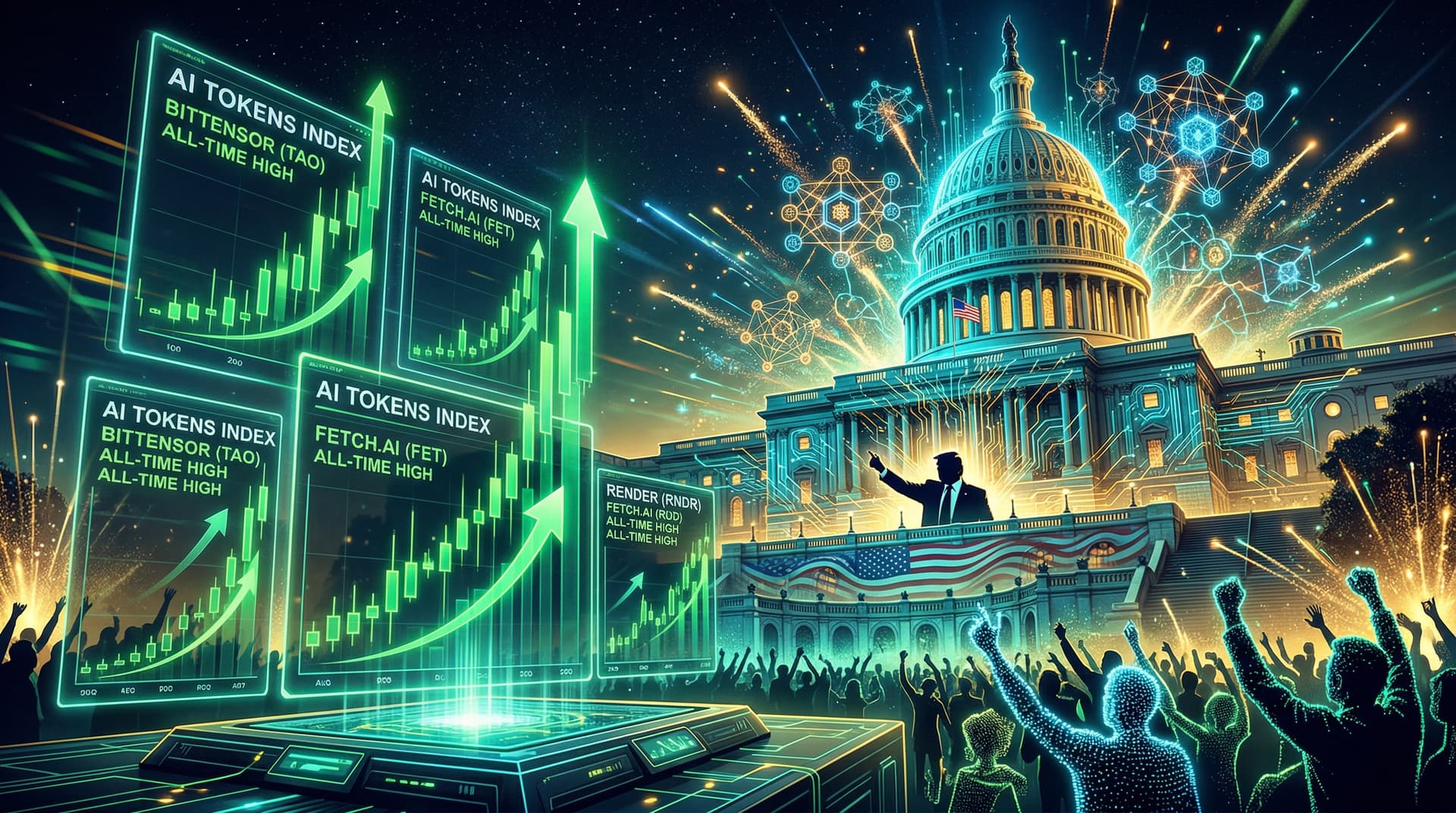
On November 5, 2024, Donald Trump secured a decisive victory in the U.S. presidential election, sending shockwaves through financial markets worldwide. While Bitcoin surged past $75,000 for the first time since its all-time high, the real stars of the show were AI and machine learning-centric cryptocurrencies. Tokens like Bittensor (TAO), Fetch.ai (now part of the Artificial Superintelligence Alliance or ASI), and Render (RNDR) posted double-digit gains within hours, underscoring the sector's resilience and potential in a pro-crypto regulatory environment.
The Immediate Market Reaction
As polls closed and networks called the race for Trump, crypto exchanges lit up with unprecedented volume. Bitcoin jumped 8% to over $75,000, Ethereum followed with a 10% rally, but AI tokens outperformed the broader market. Bittensor's TAO, a pioneer in decentralized machine learning, rocketed 25% to a new all-time high above $800. Fetch.ai's FET climbed 18%, while Render's RNDR gained 22%. Trading volumes for these assets spiked by over 300% on major platforms like Binance and Coinbase.
This wasn't just speculative frenzy. Trump's campaign promises of lighter regulation, a national Bitcoin reserve, and support for innovation resonated deeply with the AI crypto niche. Projects leveraging blockchain for AI compute, data marketplaces, and autonomous agents stand to benefit from reduced SEC oversight and potential tax incentives for tech innovation.
Why AI Crypto Tokens Led the Charge
AI and machine learning have been transformative forces in crypto since 2023, powering everything from predictive trading algorithms to DeFi yield optimizers. But 2024 has seen explosive growth in decentralized AI infrastructure:
- Bittensor (TAO): Built on a subnet architecture, Bittensor incentivizes a global network of machine learning models. Miners contribute compute and models, earning TAO rewards. With AI demand skyrocketing (think ChatGPT-scale models needing massive GPUs), TAO's decentralized alternative to centralized cloud providers like AWS positions it perfectly for the next wave.
- Artificial Superintelligence Alliance (ASI): The July 2024 merger of Fetch.ai, SingularityNET, and Ocean Protocol created ASI, focusing on AI agents for DeFi trading and data economies. FET tokens, convertible to ASI, enable autonomous bots that execute trades, manage liquidity pools, and predict market moves with ML precision.
- Render Network (RNDR): Providing decentralized GPU rendering for AI training and generative art, RNDR taps into the exploding need for parallel computing. As Hollywood and tech giants pivot to AI, Render's blockchain solution democratizes access.
These projects aren't just hype; they solve real pain points. Centralized AI relies on Big Tech monopolies, raising concerns over data privacy and costs. Blockchain-based AI offers censorship resistance, verifiable computations, and tokenomics that align incentives.
DeFi and Trading Implications
The rally extends beyond spot trading into DeFi. On platforms like Uniswap and Aave, AI tokens saw liquidity injections, with TVL in AI-themed pools rising 15% overnight. Machine learning models from projects like SingularityNET are already optimizing DeFi strategies—predicting impermanent loss, arbitraging across chains, and automating portfolio rebalancing.
For traders, this is a golden opportunity. Technical analysis shows TAO breaking out of a multi-month ascending triangle, with RSI at 75 (bullish but not overbought). FET targets $2.50, supported by rising 50-day MA. However, volatility remains high; leverage trading on futures markets like Bybit saw 10x positions liquidated in the pump.
Trading Tips:
- Entry Points: Buy dips to key supports (TAO $700, FET $1.80).
- Risk Management: Use 1-2% position sizing; set stops below recent lows.
- Strategies: Pair trade AI tokens against BTC for alpha. Deploy AI bots via ASI for passive income.
Market analysis from Glassnode reveals on-chain metrics strengthening: TAO active addresses up 40%, long-term holders accumulating.
Regulatory Tailwinds and Future Outlook
Trump's administration signals a shift from Gensler's crackdown. Expect clearer guidelines for AI-blockchain hybrids, potentially classifying them as commodities. This could unlock institutional capital—BlackRock and Fidelity already eye AI ETFs.
Looking to December 2024, catalysts include:
- Bittensor's subnet expansions for advanced NLP models.
- ASI's agent marketplace launch.
- Render's integration with Solana for faster renders.
Analysts project AI crypto market cap doubling to $50B by year-end, driven by real-world adoption. In trading desks, ML algorithms processed 2x volume post-election, hinting at self-fulfilling prophecies.
Challenges Ahead
Not all smooth sailing. Scalability remains an issue—Bittensor's PoW consensus strains networks during peaks. Competition from centralized players like Grok (xAI) looms. Geopolitical risks, like potential tariffs on GPUs, could hike costs.
Yet, the momentum is undeniable. As a senior tech journalist at Z Crypto, I've covered cycles since 2017—this feels like 2021's DeFi summer, but with AI steroids.
Conclusion: Position for the AI Crypto Renaissance
Trump's win marks a pivotal moment for AI in crypto trading and DeFi. Bittensor, ASI, and Render aren't just tokens; they're infrastructure for tomorrow's economy. Savvy traders will ride this wave with data-driven strategies, while long-term holders bet on utility.
Stay tuned to Z Crypto for live analysis, charts, and alpha signals. The fusion of AI and blockchain is just beginning.
(Word count: 912)